[25] Hughes, I.V., Evans, S.D., and Droser, M.L., in press. Discovery of an Ediacaran bilaterian with an ecdysozoan affinity from South Australia. Current Biology.
[24] Boan, P.C., Evans, S.D., and Droser, M.L., 2024. And now for something completely random: Spatial distributions of Dickinsonia on the Ediacaran seafloor. Global and Planetary Change, v. 238, 104467.
[23] Evans, S.D., Hughes, I.V., Hughes, E.B., Dzaugis, P.W., Dzaugis, M.P., Gehling, J.G., García-Bellido, D.C.and Droser, M.L., 2024. A new motile animal with implications for the evolution of axial polarity from the Ediacaran of South Australia. Evolution & Development, e12491.
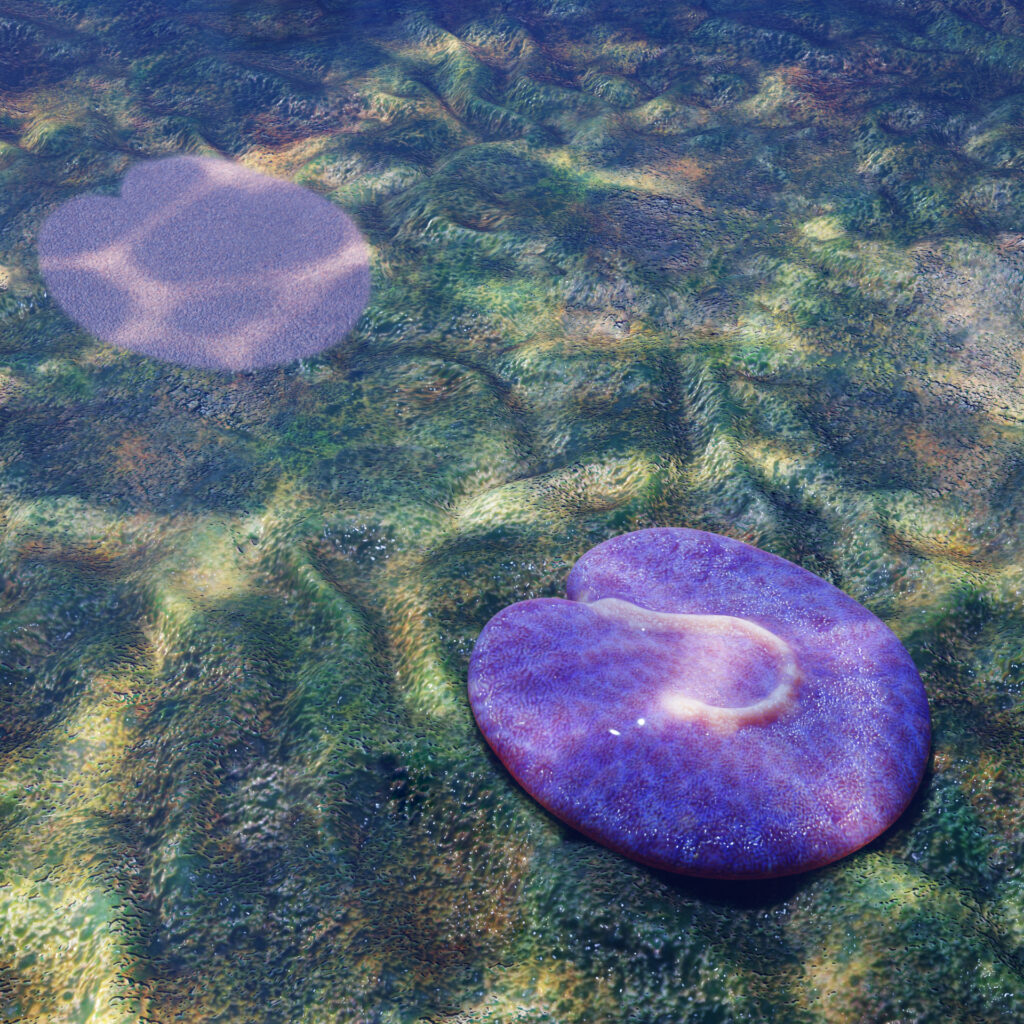
[22] Evans, S.D., Smith, E.F., Vayda, P., Nelson, L.L., and Xiao, S. 2024 The Ediacara Biota of the Wood Canyon Formation: Latest Precambrian macrofossils and sedimentary structures from the southern Great Basin. Global and Planetary Change, v. 238, 104547.
[21] Boan, P.C., Evans, S.D., Hall, C.M.S., and Droser, M.L., 2023. Spatial distributions of Tribrachidium, Rugoconites and Obamus from the Ediacara Member (Rawnsley Quartzite), South Australia. Paleobiology, v. 49, 602-620.
[20] Evans S.D., Hunt, G., Gehling, J.G., Sperling, E.A., and Droser, M.L. 2023. Species of Dickinsonia Sprigg from the Ediacaran of South Australia. Palaeontology, e12635.
[19] Droser, M.L., Evans, S.D., Trahan, L.G., Surprenant, R.L., Hughes, I.V., Hughes, E.B., and Gehling, J.G. 2022. What happens between depositional events, stays between depositional events: The significance of Organic Mat Surfaces in the capture of Ediacara communities and the sedimentary rocks that preserve them. Frontiers in Earth Science, v. 10, 826353.
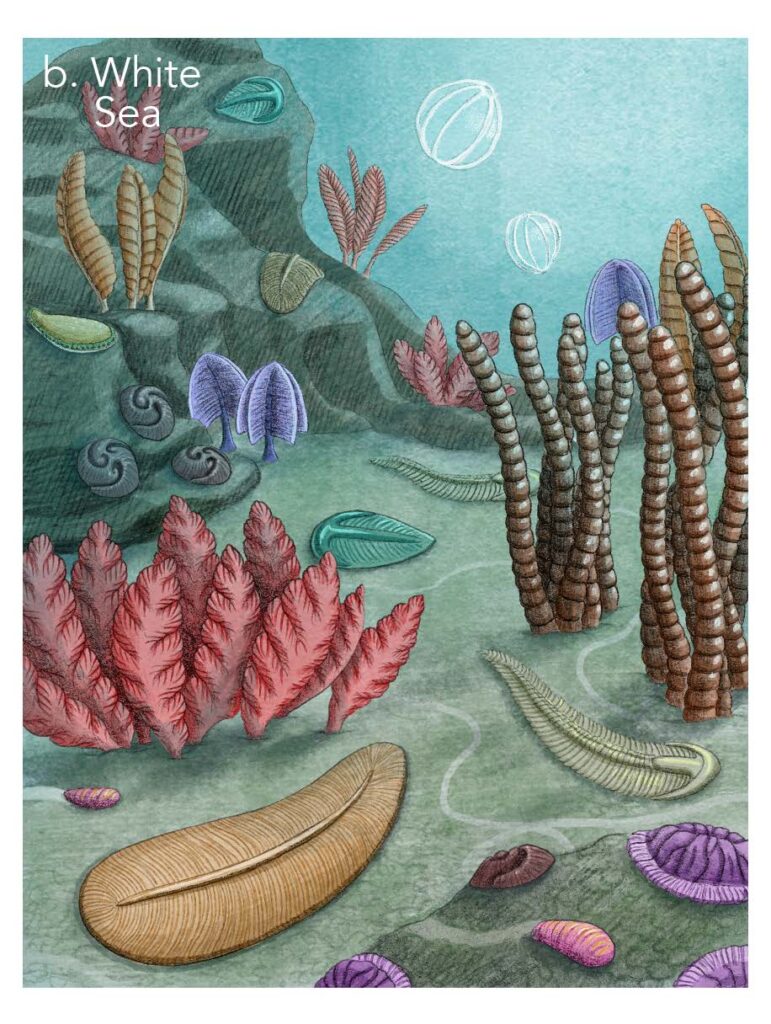
[18] Evans S.D., Tu, C., Rizzo, A., Surprenant, R.L., Boan, P.C., McCandless, H., Marshall, N., Xiao, S., and Droser, M. L. 2022. Environmental drivers of the first major animal extinction across the Ediacaran White Sea-Nama transition. Proceedings of the National Academy of Science, v.119, e2207475119.
[17] Mitchell, E.G., Evans, S.D., Chen, Z., and Xiao, S., 2022. A new approach for investigating spatial relationships of ichnofossils: A case study of Ediacaran-Cambrian animal traces. Paleobiology, v.48, 557-575.
[16] Boyer, D.L., Martinez, A.M., Evans, S.D., Cohen, P.A., Hadaad, E.E., Pippenger, K.H., Love, G.D., and Droser, M.L., 2021. Living on the Edge: The impact of protracted oxygen stress on life in the late Devonian. Palaeogeography, Palaeoclimatology, Palaeoecology, v. 566, 110226.
[15] Evans, S.D., Droser, M.L., and Erwin, D.H., 2021. Developmental processes in Ediacara macrofossils. Proceedings of the Royal Society of London, Biology, v. 288, 20203055.
[14] Evans, S.D., Gehling, J.G., Erwin D.H., and Droser, M.L. 2021. Ediacara growing pains: Modular addition and development in Dickinsonia costata. Paleobiology, v. 48, 83-98.
[13] Droser, M.L., Tarhan, L.G., Evans, S.D., Surprenant, R.L., and Gehling, J.G., 2020. Biostratinomy of the Ediacara Member (Rawnsley Quartzite, South Australia): Implications for Depositional Environments, Ecology and Biology of Ediacara Organisms. Interface Focus, v. 10, 20190100.
[12] Evans, S.D., Hughes, I.V., Gehling, J.G., and Droser, M.L., 2020. Discovery of the oldest bilaterian fossil from the Ediacaran of South Australia. Proceedings of the National Academy of Sciences, v. 117, 78445-7850.
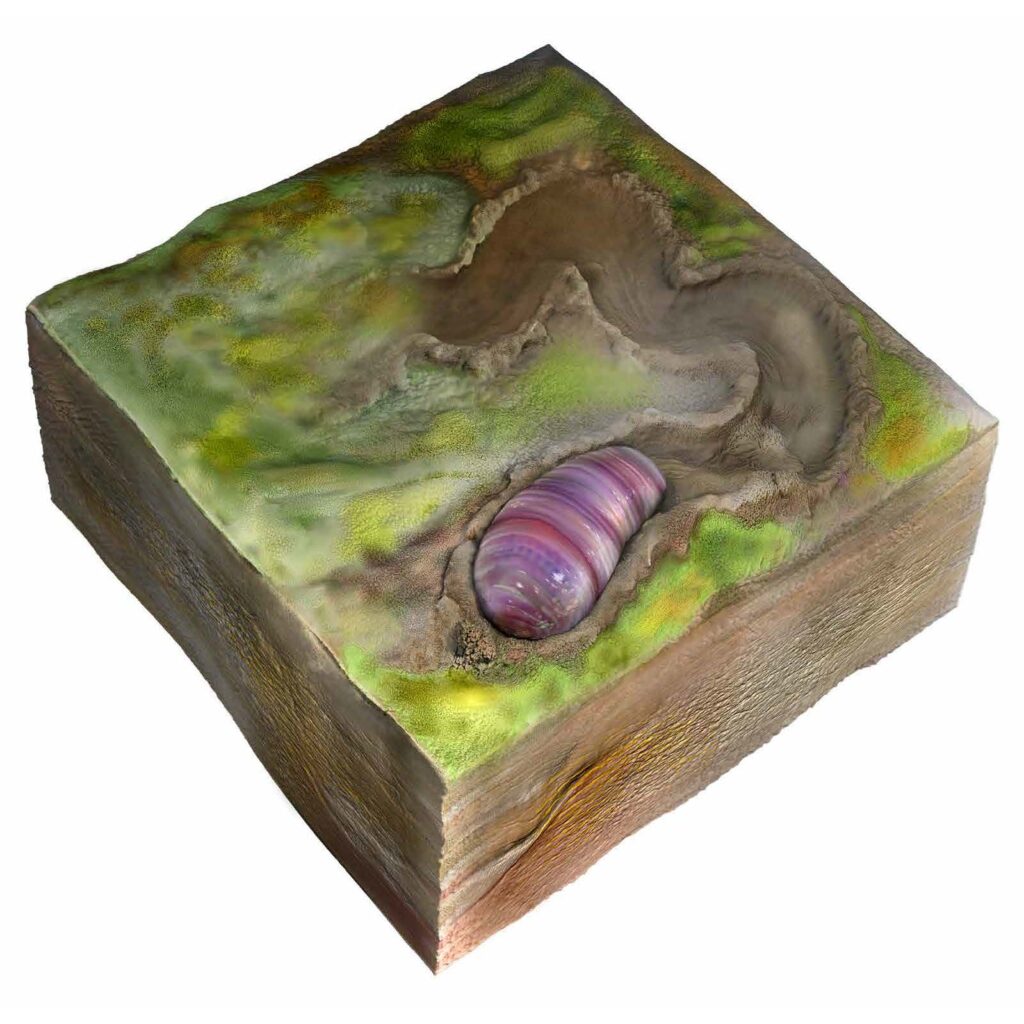
[11] Xiao, S., Gehling, J.G., Evans, S.D., Hughes, I.V., and Droser, M.L., 2020. Probable benthic macroalgae from the Ediacara Member, South Australia. Precambrian Research, v. 350, 105903.
[10] Droser, M.L., Evans, S.D., Dzaugis, P.W., Hughes, E.B., and Gehling, J.G., 2019. Attenborites janeae: A new enigmatic organism from the Ediacara Member (Rawnsley Quartzite), South Australia. Australian Journal of Earth Sciences, v. 67, 915-921.
[9] Dzaugis, P.W., Evans, S.D., Droser, M.L., Gehling, J.G, and Hughes, I.V., 2019. Stuck in the Mat: Obamus coronatus, A new benthic organism from the Ediacara Member, Rawnsley Quartzite, South Australia. Australian Journal of Earth Sciences, v. 67, 897-903.
[8] Evans, S.D., Dzaugis, P.W., Droser, M.L., and Gehling, J.G., 2019. You can get anything you want from Alice’s Restaurant Bed: Exceptional preservation and an unusual fossil assemblage from a newly excavated bed (Ediacara Member, Nilpena, South Australia). Australian Journal of Earth Sciences, v. 67, 873-883.
[7] Evans, S.D., Gehling, J.G., and Droser, M.L., 2019. Slime travelers: Early evidence of animal mobility and feeding in an organic mat world. Geobiology, v.17(5), 490-509. Cover image.
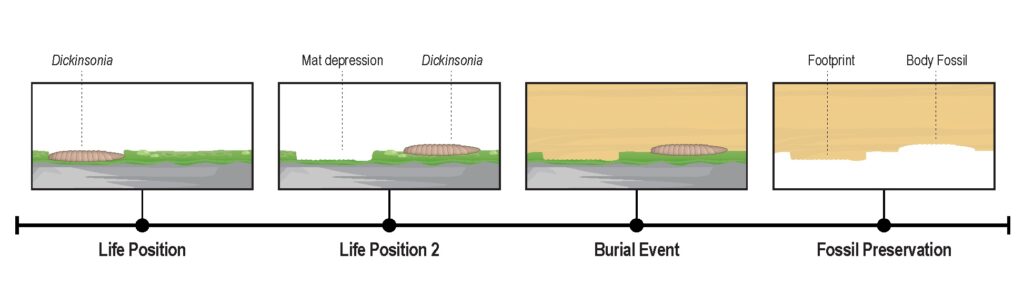
[6] Evans, S.D., Huang, W., Gehling, J.G., Kisailus, D., and Droser, M.L., 2019. Stretched, mangled and torn: Responses of the Ediacaran fossil Dickinsonia to variable forces. Geology, v. 47(11), 1049-1053. Cover image.
[5] Droser, M.L., Gehling, J.G., Tarhan, L.G., Evans, S.D., Hall, C.M.S., Hughes, I.V., Hughes, E.B., Dzaugis, M.E., Dzaugis, M.P., Dzaugis, P.W. and Rice, D., 2018. Piecing together the puzzle of the Ediacara Biota: Excavation and reconstruction at the Ediacara National Heritage site Nilpena (South Australia): Palaeogeography, Palaeoclimatology, Palaeoecology. v. 513, 132-145.
[4] Evans, S.D., Diamond, S.W., Droser, M.L., and Lyons, T.W., 2018. Dynamic oxygen and coupled biological and ecological innovation during the second wave of the Ediacara Biota. Emerging Topics in Life Sciences, ETLS20170148.
[3] Geeza, T.J., Gillikin, D.P., Goodwin, D.H., Evans, S.D., Watters, T., and Warner, N.R., 2018. Controls on magnesium, manganese, strontium, and barium concentrations recorded in freshwater mussel shells from Ohio. Chemical Geology, v. 526, 142-152.
[2] Evans, S.D., Droser, M.L., and Gehling, J.G., 2017. Highly regulated growth and development of the Ediacara macrofossil Dickinsonia. PLoS ONE, v. 12(5), e0176874.
[1] Evans, S.D., Droser, M.L., and Gehling, J.G., 2015. Dickinsonia lift off: Evidence of current derived morphologies. Palaeogeography, Palaeoclimatology, Palaeoecology, v. 434, 28-33.
